

Why is my refrigerator not cooling? If you opened your refrigerator and discovered that your milk isn’t cold, your food feels warmer than usual, or the refrigerator seems to be running without actually getting cold, you probably want answers quickly.
A refrigerator that isn’t cooling properly can be caused by something as simple as an incorrect temperature setting or blocked airflow. However, it can also indicate a failed fan motor, faulty thermostat, defrost system problem, dirty condenser coils, or compressor issue.
If you’re asking “Why is my refrigerator not cooling?”, this guide will walk you through some of the most common causes, a few things you can safely check yourself, and when it’s time to call a professional appliance repair technician.
According to the U.S. Food and Drug Administration, refrigerators should be kept at 40°F (4°C) or below to help keep perishable foods safe. If your refrigerator is getting warmer than that, don’t ignore the problem.
Why Is My Refrigerator Not Cooling Properly?
There isn’t one universal answer to “Why is my refrigerator not cooling?” Modern refrigerators rely on several components working together to remove heat and circulate cold air throughout the refrigerator and freezer compartments.
When one part of that system isn’t working correctly, temperatures can begin to rise.
Here are 10 of the most common reasons a refrigerator may stop cooling properly.
1. The Refrigerator Temperature Setting Is Too High
Before assuming that your refrigerator needs a major repair, check the temperature setting.
Someone may have accidentally changed the controls while loading groceries, cleaning the refrigerator, or moving items around inside and this may be the exact reason why you ask “Why is my refrigerator not cooling?”.
The FDA recommends maintaining your refrigerator at 40°F or below and your freezer at approximately 0°F.
If your refrigerator has a digital temperature display, check the setting. If it uses a numbered dial rather than an actual temperature, consult the owner’s manual for the manufacturer’s recommended setting.
After changing the setting, give the refrigerator enough time to stabilize before deciding whether the adjustment solved the problem.
Why Is My Refrigerator Not Cooling Even After Adjusting the Temperature?
If you’ve lowered the temperature setting and the refrigerator remains too warm after sufficient time has passed, the problem is probably somewhere else.
Instead of repeatedly lowering the control, continue checking for other common causes for the reason “why is my refrigerator not cooling?”.
2. The Refrigerator Is Overpacked
Cold air needs room to circulate.
A refrigerator packed tightly with food, containers, drinks, and leftovers can restrict airflow and create warm areas inside the compartment.
The FDA specifically recommends avoiding overpacking because cold air must circulate around refrigerated foods to keep them properly chilled.
Try reorganizing your refrigerator so air can move freely around the shelves and vents. Avoid placing large containers directly in front of interior air vents.
If you’re wondering “Why is my refrigerator not cooling evenly?”, poor air circulation is one of the easiest things to check.
3. The Refrigerator Door Isn’t Sealing Properly
A damaged, dirty, loose, or worn refrigerator door gasket can allow cold air to escape while warm air enters the appliance. This will definitely cause you to ask “Why is my refrigerator not cooling?”.
Check the rubber seal around the entire door.
Look for:
- Cracks or tears
- Loose sections
- Food or debris preventing a tight seal
- Warped areas
- Sections pulling away from the door
- Excessive condensation around the opening
You can also close the refrigerator door on a piece of paper. If the paper pulls out with very little resistance in certain areas, the gasket may not be sealing tightly.
ENERGY STAR recommends checking refrigerator door seals and replacing them when they are no longer airtight.
4. Dirty Condenser Coils May Be Reducing Cooling Performance
Another possible answer to “Why is my refrigerator not cooling?” is dirty condenser coils.
The condenser system helps release heat removed from inside your refrigerator. Depending on the model, condenser coils may be underneath the appliance, behind it, or enclosed within the cabinet.
When accessible condenser coils become heavily coated with dust, dirt, and pet hair, the refrigerator may have difficulty releasing heat efficiently.
ENERGY STAR recommends allowing adequate air circulation behind refrigerators and keeping accessible condenser coils clean when applicable.
Before attempting to clean refrigerator coils, unplug the refrigerator and consult the manufacturer’s instructions for your specific model. Some modern refrigerators aren’t designed for consumer access to the condenser system.

5. The Condenser Fan Isn’t Working
Many refrigerators use a condenser fan to move air across the condenser coils and compressor. This could be why you ask “Why is my refrigerator not cooling?”.
If that fan stops working, heat may not dissipate properly.
Signs of a possible condenser fan problem can include:
- Refrigerator running but not getting cold enough
- Unusual noises near the bottom or back of the refrigerator
- Compressor running unusually hot
- Fan not spinning when it should
Diagnosing electrical components or replacing a fan motor is generally better left to a trained appliance repair professional.
6. The Evaporator Fan May Have Failed
The evaporator fan circulates cold air from the evaporator area throughout the refrigerator is another reason why you ask “Why is my refrigerator not cooling?”.
If the freezer seems cold but the refrigerator compartment is warm, an airflow or evaporator fan problem may be involved.
Depending on the refrigerator design, you might notice that the usual sound of circulating air is gone.
You may also notice certain sections staying cold while others become unusually warm.
If you’ve been asking “Why is my refrigerator not cooling but my freezer still works?”, a problem involving airflow between the freezer and refrigerator compartments is one possibility.
7. The Air Vents Are Blocked
Not every cooling problem requires a replacement part.
Refrigerators contain vents that allow cold air to circulate between different areas of the appliance. Large containers, food packages, or ice buildup can obstruct these vents. This can be a surprising reason why you ask yourself “Why is my refrigerator not cooling?”.
Look inside your refrigerator and freezer for visible vents and make sure they aren’t blocked.
Rearranging food and restoring airflow may improve cooling if the problem is simply an obstructed vent and may be the answer to “is another reason why you ask “”Why is my refrigerator not cooling?”.
8. The Refrigerator Has a Defrost System Problem
Modern frost-free refrigerators periodically activate a defrost system to prevent excessive ice accumulation around the evaporator.
Depending on the model, this system may include components such as:
- Defrost heater
- Defrost thermostat or sensor
- Electronic control board
- Timer or control circuitry
If part of the defrost system fails, ice can accumulate around the evaporator and eventually restrict airflow.
You may see frost or ice building up on the freezer’s interior back panel.
If you’re thinking “Why is my refrigerator not cooling when the freezer is covered in frost?”, a defrost system failure is one possible explanation.
Proper diagnosis is important because several different components can produce similar symptoms.
9. The Thermistor, Thermostat, or Temperature Sensor Is Faulty
Your refrigerator needs to know when additional cooling is required.
Depending on the model, a thermostat, thermistor, temperature sensor, or electronic control system monitors temperatures and helps control the compressor and fans.
A faulty sensor may provide incorrect temperature information to the refrigerator’s control system.
This can create confusing symptoms. The refrigerator may feel warm even though the display indicates that the temperature is normal, or the compressor may not operate as expected.
Testing these components may require electrical diagnostic equipment and model-specific technical information.
10. There Could Be a Compressor or Sealed-System Problem
If you’ve checked the obvious possibilities and are still asking “Why is my refrigerator not cooling?”, the problem could involve the compressor or sealed refrigeration system.
Possible sealed-system problems include:
- Compressor failure
- Refrigerant leak
- Restriction in the sealed system
- Compressor start component failure
- Other refrigeration-system faults
These aren’t typically DIY repairs.
Refrigeration systems require specialized diagnostic equipment and professional expertise. Some repairs involving refrigerants must also follow applicable environmental and safety requirements.
A qualified technician can determine whether the problem is actually the compressor or whether another component is preventing the refrigerator from cooling.
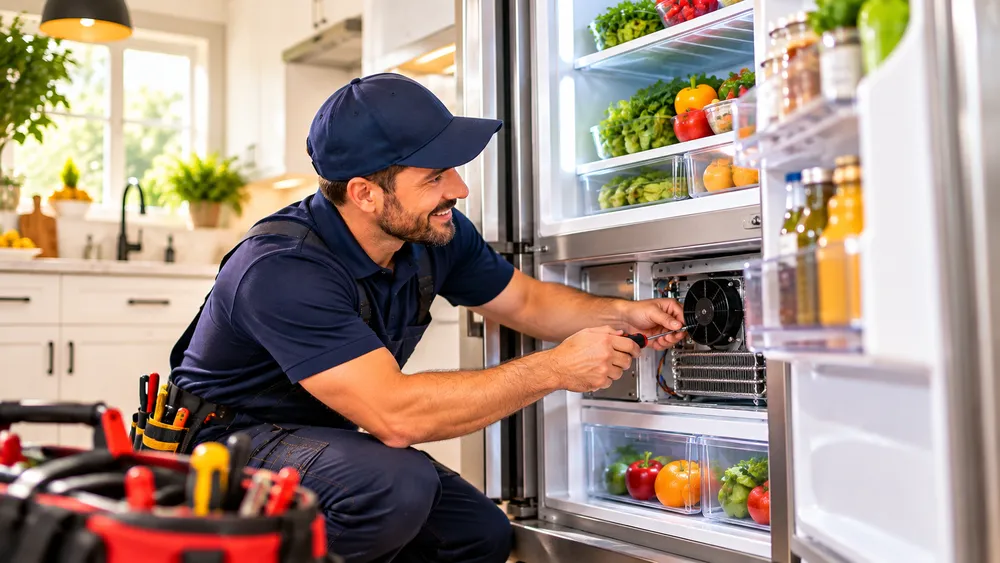
Why Is My Refrigerator Not Cooling but the Freezer Is Cold?
This is an especially common refrigerator problem.
If your freezer is maintaining a low temperature while the fresh-food compartment is warm, the refrigeration system is clearly producing at least some cooling. The problem may instead involve getting that cold air into the refrigerator compartment.
Possible causes include:
- Blocked air vents
- Evaporator fan problems
- Excessive frost around the evaporator
- Defrost system failure
- Damper problems
- Temperature sensor problems
Don’t assume that a cold freezer means the refrigerator is functioning correctly. The two compartments depend on proper airflow and temperature control to maintain the correct conditions.
Why Is My Refrigerator Not Cooling but the Light Is On?
The interior light only tells you that the refrigerator is receiving electrical power. It doesn’t mean that the compressor, fans, sensors, or cooling system are operating correctly.
If the refrigerator light works but the appliance isn’t cooling, listen for the compressor and fans.
A completely quiet refrigerator may have a control, electrical, start-device, or compressor issue. A refrigerator that seems to run continuously without getting cold may have a different problem.
Because several failures can create similar symptoms, professional diagnosis can prevent replacing parts unnecessarily.
What Should I Check Before Calling for Refrigerator Repair?
If you’re wondering “Why is my refrigerator not cooling?”, there are several safe checks you can make before scheduling service:
- Check the temperature setting. Make sure it wasn’t accidentally changed.
- Verify that the refrigerator has power. Check the lights and display.
- Make sure the doors close completely.
- Inspect the door gasket. Look for dirt, gaps, cracks, or damage.
- Check for blocked air vents.
- Avoid overpacking the refrigerator.
- Look for excessive frost or ice buildup.
- Listen for unusual noises.
- Check the actual temperature with an appliance thermometer.
- Check accessible condenser coils if your manufacturer recommends consumer cleaning.
If these basic checks don’t solve the problem, professional diagnosis may be the safest and fastest option.
How Cold Should My Refrigerator Be?
The FDA recommends keeping your refrigerator at 40°F or below and your freezer at 0°F.
An inexpensive refrigerator thermometer is one of the easiest ways to determine whether your appliance is actually maintaining a safe temperature.
You can read more about refrigerator temperature and food safety in the FDA’s Refrigerator Thermometers: Cold Facts About Food Safety.
ENERGY STAR also recommends maintaining appropriate refrigerator temperatures, checking door seals, minimizing the amount of time the door remains open, allowing adequate ventilation around the appliance, and cleaning condenser coils when appropriate for the refrigerator model. See the ENERGY STAR refrigerator guidance for additional information.
What Should I Do With My Food if the Refrigerator Isn’t Cooling?
Food safety should become a priority when a refrigerator stops cooling.
Don’t rely only on how food looks or smells to determine whether it is safe.
The FDA recommends keeping refrigerators at 40°F or below. If a power outage is responsible for the problem, the FDA says an unopened refrigerator can generally keep food cold for about four hours.
If perishable refrigerated foods have been above 40°F for four hours or longer, FDA guidance recommends discarding them.
When you’re unsure about the safety of a particular food, consult current FDA or USDA food-safety guidance rather than taking a chance.
When Should You Call a Refrigerator Repair Technician?
If the basic troubleshooting steps above don’t restore proper cooling, it’s time to consider professional service to ask “Why is my refrigerator not cooling?”.
You should also consider scheduling service when:
- The refrigerator is above 40°F despite the correct setting
- The refrigerator runs continuously but doesn’t get cold
- The freezer works but the refrigerator remains warm
- You notice excessive frost or ice buildup
- Fans aren’t operating
- You hear clicking, grinding, buzzing, or other unusual sounds
- Water is leaking from the refrigerator
- The compressor appears excessively hot
- The refrigerator repeatedly stops cooling
- You suspect an electrical, compressor, or sealed-system problem
Home Town Appliance Repair provides refrigerator and freezer repair, including service for refrigerators that aren’t cooling properly, ice maker problems, water dispenser issues, leaks, compressor failures, defrost system problems, and other appliance issues.
Visit our Appliance Repair Services page to learn more about the appliance problems we service.
Why Is My Refrigerator Not Cooling? Home Town Appliance Repair Can Help
When you’re searching “Why is my refrigerator not cooling?”, sometimes the solution is simple. A temperature setting, blocked vent, dirty door seal, or overcrowded refrigerator may be something you can correct yourself.
Other cooling problems require professional diagnosis.
A failed fan motor, temperature sensor, defrost component, control board, compressor, or sealed-system component can be difficult to diagnose without the proper experience and equipment.
Home Town Appliance Repair provides professional appliance repair with an emphasis on honesty, dependable workmanship, transparent communication, and treating customers like neighbors.
If your refrigerator isn’t keeping your food cold, visit our Contact Home Town Appliance Repair page or call 859-249-0933 to request service.
Don’t let a refrigerator cooling problem turn into spoiled food or a larger appliance failure. If you’ve checked the basics and you’re still wondering “Why is my refrigerator not cooling?”, Home Town Appliance Repair is ready to help.
Frequently Asked Questions About a Refrigerator Not Cooling
Why is my refrigerator not cooling but the freezer works?
If the freezer is cold but the refrigerator is warm, there may be a problem with airflow between the compartments. Possible causes include blocked vents, an evaporator fan problem, frost buildup, a defrost system malfunction, or a damper issue.
Why is my refrigerator running but not getting cold?
A refrigerator can run without cooling properly if it has dirty condenser coils, poor airflow, a failed fan, sensor problem, defrost failure, compressor problem, or sealed-system issue. Professional diagnosis may be necessary to identify the exact cause of why you ask “Why is my refrigerator not cooling?”.
What is the correct refrigerator temperature?
The FDA recommends maintaining a refrigerator temperature of 40°F or below and a freezer temperature of 0°F.
Can an overfilled refrigerator stop cooling properly?
Yes. An overcrowded refrigerator can restrict the circulation of cold air and create warm areas. Leave enough room around food and containers for air to circulate.
How do I know if my refrigerator door seal is bad?
Look for cracks, gaps, loose sections, or areas where the gasket doesn’t make firm contact with the refrigerator cabinet. You can also close the door on a piece of paper and check whether there is resistance when you pull it out.
Should I unplug my refrigerator if it isn’t cooling?
Not automatically. If the refrigerator still has some cooling capacity, unplugging it could cause temperatures to rise faster. However, unplug the refrigerator before performing manufacturer-approved maintenance around accessible electrical or mechanical components. If you notice burning smells, smoke, sparking, or another electrical hazard, disconnect power if it is safe to do so and seek professional assistance.
Is a refrigerator worth repairing if it isn’t cooling?
It depends on the refrigerator’s age, condition, diagnosis, repair cost, and replacement cost. A professional diagnosis can help determine what failed before you decide whether repair or replacement makes more financial sense.