
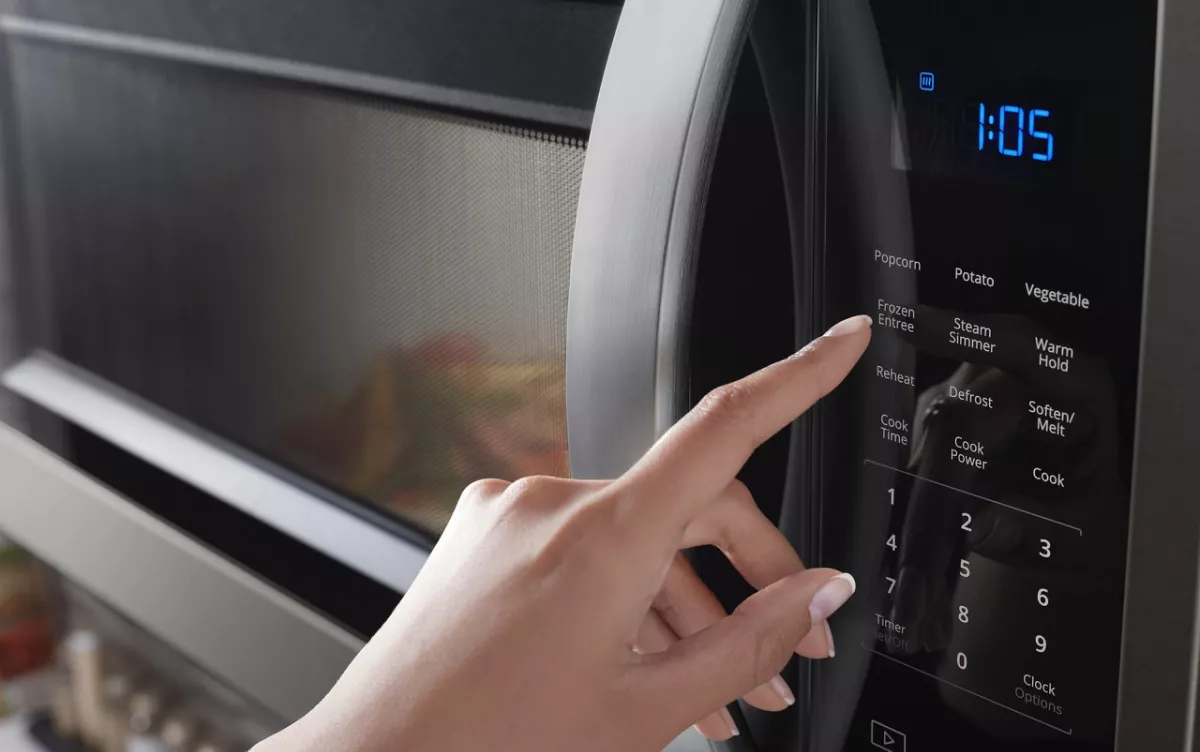
A microwave makes busy days easier, whether you are reheating lunch, preparing vegetables, or warming leftovers after work. When it suddenly stops working, a simple meal can become an unexpected inconvenience. You may press Start and get no response, or hear the appliance running while your food stays cold.
If you have a microwave not heating or starting, begin by identifying which symptom you are experiencing. A blank display, locked control panel, and microwave that runs without heating can point to different concerns.
Some problems involve settings you can check safely. Others require professional testing. Hometown Appliance Repair helps Central Kentucky homeowners address appliance problems and understand their repair options. Its microwave repair services include starting failures, heating problems, door switches, controls, displays, and related concerns.
Microwave Not Heating or Starting: Identify the Symptom First
Before trying to solve the problem, take a moment to describe what happens during normal use.
Does the microwave have a working display? Do the buttons respond? Does pressing Start begin a cooking cycle? If it runs, does food warm at all?
These observations help distinguish three common situations:
-
The microwave appears completely unresponsive: The display is dark and the controls do nothing.
-
The microwave has power but will not start: The display works, but a cooking cycle does not begin.
-
The microwave runs without heating: The timer counts down, but the food remains cold.
You do not need to determine which internal component failed. A clear description gives a repair technician useful information without requiring you to open the appliance.
Keep Microwave Checks Outside the Cabinet
Microwave repairs require particular care because unplugging the appliance does not eliminate every internal electrical hazard.
GE Appliances explains that a microwave’s high-voltage capacitor can retain a dangerous charge after disconnection. It also notes that diagnosis generally requires special equipment.
Limit homeowner checks to accessible controls, the intact door, the owner’s manual, and visible external connections. Do not remove the outer cover, replace an internal fuse, test wiring, or attempt to discharge components.
If a simple setting does not explain the problem, professional diagnosis is the appropriate next step.
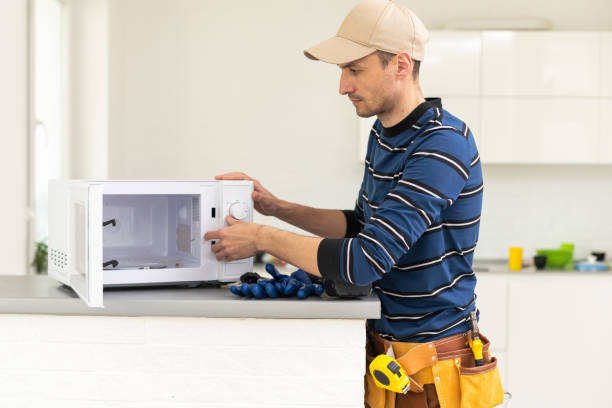
Why Your Microwave Runs but Does Not Heat
A microwave that lights up and counts down can appear to be cooking normally. However, those visible functions do not prove that the heating system is operating.
Before assuming the appliance needs a repair, review what function you selected.
Check Whether You Selected Timer Instead of Cooking
A kitchen timer can count down without heating food. Depending on the controls, it may be easy to select Timer when you intended to enter a cooking time.
GE’s guidance for a microwave that runs without heating recommends confirming that the Timer function was not used inadvertently. It also recommends checking that the door is securely closed.
Consult your manual if the distinction between timer and cooking controls is unclear. If the microwave otherwise appears undamaged, use it only according to the manufacturer’s instructions. Never run it empty to investigate a heating problem.
Check for Demonstration Mode
Some microwaves have a demonstration mode intended to show how the controls work. Features vary, so this possibility should be checked against your specific model’s manual.
Whirlpool’s microwave support guidance includes checking demonstration mode on models equipped with that feature.
Do not use an unrelated model’s button sequence. Locate the correct instructions using your microwave’s model number.
Persistent No-Heat Problems Need Testing
If the settings are correct and the door closes properly, a microwave that continues running without heating needs service.
Several internal faults can produce this symptom. The fact that food stays cold does not establish whether one particular component needs replacement.
Avoid ordering parts based on a video describing a similar problem. Professional testing helps identify the cause and gives you a meaningful basis for comparing repair with replacement.
Why Your Microwave Has Power but Will Not Start
A working display can make a starting failure confusing. You may be able to set a time, hear button tones, or see the clock while the appliance refuses to begin cooking.
Start with the controls and door rather than assuming the electronics have failed.
Look for a Control Lock Indicator
A control lock helps prevent unintended operation. When enabled, it may stop the appliance from responding to cooking commands.
Whirlpool explains that a control lock can prevent a microwave from starting. Depending on the model, the display may show “LOC,” “L,” or a padlock symbol. The owner’s manual provides the appropriate unlocking procedure.
If unlocking the controls restores normal operation, no repair may be necessary. If the controls remain unresponsive, describe that behavior when requesting service.
Make Sure the Door Closes Normally
A microwave’s door and safety interlocks are essential to its operation. A door that does not close securely can prevent a cooking cycle from beginning.
Check only for an obvious obstruction that is accessible without dismantling anything. Do not slam the door, bend the latch, or hold it in a particular position to make the appliance run.
If starting depends on pushing or lifting the door, stop using the microwave and arrange assessment. Never bypass a door switch.
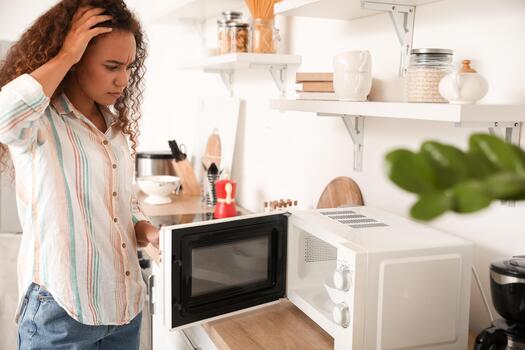
What If the Microwave Display Is Blank?
A dark display may involve an interruption in the power supply or a problem within the appliance. It does not identify the cause by itself.
If the plug and outlet are readily accessible and undamaged, observe whether the appliance is connected normally. Do not remove a built-in microwave, move heavy equipment, or open electrical covers to investigate.
If other items on the same circuit have also lost power, the issue may extend beyond the microwave. Repeated breaker trips, damaged outlets, or a scorched plug need appropriate professional attention.
Tell Hometown Appliance Repair whether the display went dark during cooking, after a power interruption, or without an obvious trigger. That history can help establish what needs evaluation.
Door Damage Is a Reason to Stop Using the Microwave
A bent door, loose hinge, damaged latch, or compromised seal deserves attention even if the appliance still heats.
The FDA’s microwave oven guidance advises contacting the manufacturer when door hinges, latches, or seals are damaged or the door does not operate properly. It also advises against operating a microwave with a door that does not close firmly or is bent or damaged.
Do not tape the door closed or continue testing it. If the microwave appears to operate with the door open, discontinue use immediately and contact the manufacturer.
When scheduling repair, mention door damage at the beginning of the conversation.
Sparks, Burning Smells, and Unusual Noises
A microwave not heating or starting may also develop other symptoms. These details matter, particularly if the problem began with sparks, a burning smell, or a new sound.
Stop using the appliance if you notice these warning signs. Do not repeatedly restart it to see whether the problem disappears.
Write down what happened before the failure. For example, explain whether an unusual noise began during cooking or the appliance shut off abruptly.
If there is an active fire inside the microwave, keep the door closed, turn it off, and disconnect power only if safe. Leave the area and call emergency services if the fire does not go out or you cannot safely manage the situation.

How Hometown Appliance Repair Can Help
Hometown Appliance Repair handles microwave starting and heating problems, along with turntable, door switch, display, control panel, noise, and interior light concerns.
A service assessment helps establish what failed and what work would address it. It also gives you an opportunity to discuss whether the repair is practical for the appliance.
The company’s About Us page describes owner Terry Paige’s emphasis on helping local families and building lasting customer relationships.
When contacting the team, identify whether your microwave is a countertop, built-in, over-the-range, or combination model. Confirm service availability for your equipment and address.
Should You Repair or Replace a Microwave?
The right decision depends on the diagnosis, total repair cost, appliance condition, and replacement requirements.
A countertop model and an installed microwave can present different financial considerations. Replacing an over-the-range appliance may involve mounting and ventilation work, while a built-in model may require a compatible trim arrangement.
Compare the complete replacement cost with the proposed repair. Include installation and removal where applicable.
Check any existing warranty coverage before authorizing paid work. Ask the manufacturer how to request service for a covered problem.
Hometown’s repair-or-replace guide provides additional considerations for evaluating appliance condition, costs, and household needs. A malfunction alone does not tell you which option is best.
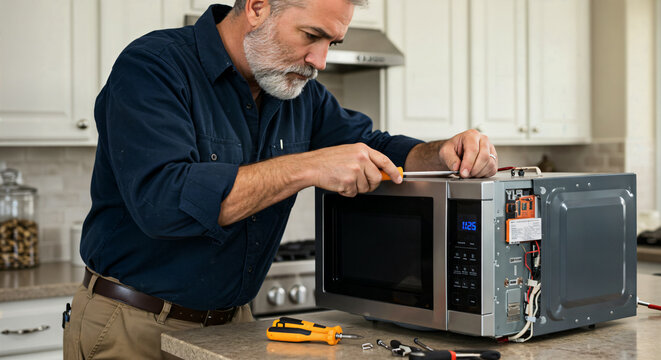
What to Share When Requesting Microwave Repair
Before calling, gather the information you can safely access:
-
The brand and model number.
-
The microwave’s installation type.
-
Whether the display and buttons work.
-
Whether a cooking cycle begins.
-
Whether food heats at all.
-
Any error message, unusual noise, or door damage.
-
When the problem started.
Avoid taking the microwave apart to find information. If the model label is not accessible, explain that when scheduling.
Ask about diagnostic charges, appointment availability, and how repair recommendations will be communicated.
Get Help With a Microwave Not Heating or Starting
A microwave problem can interrupt your routine, but you do not need to guess which internal part has failed. Check the selected function, model-specific control settings, and whether the undamaged door closes normally. Leave internal inspection and repair to a professional.
For help with a microwave not heating or starting, contact Hometown Appliance Repair or call 859-249-0933 to discuss your appliance and request service.
Disclaimer: This guide covers simple observations and control checks. It is not a substitute for professional diagnosis or microwave repair. Do not open the cabinet or attempt internal electrical repairs. Stop using an appliance with persistent faults or damage and arrange professional assessment.